Photographer / Nature Guide
From an early age, Shinya Hirose developed a deep familiarity with nature and wildlife, alongside a growing interest in photography. During his high school years, he devoted himself to photographic activities as a member of the school photography club. After graduating, he worked for a manufacturing company. Following his resignation, he undertook extended journeys, traveling around Hokkaido by bicycle with his camera equipment and later crossing Canada and Alaska. He subsequently joined a company in Kyoto, and while continuing his professional work there, began photographing the Ashiu Forest of Kyoto University's Field Science Education and Research Center in Miyama, Kyoto Prefecture. Visiting the forest almost every weekend, he gradually deepened his engagement with the site. Drawing on the knowledge and experience gained through his photography, he began working as a nature guide in Ashiu in 2010. In 2016, he left his company position and has since been active as a professional photographer and nature guide.

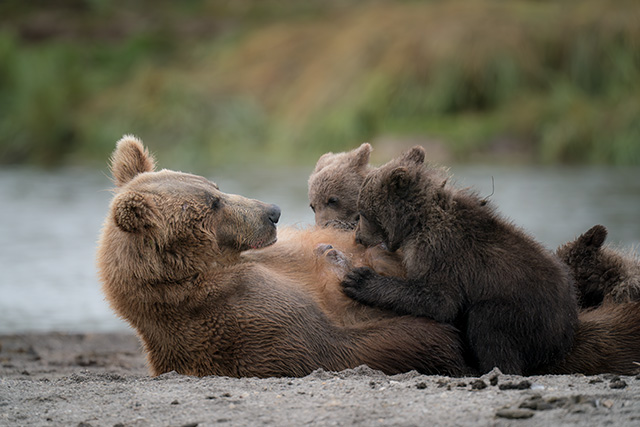


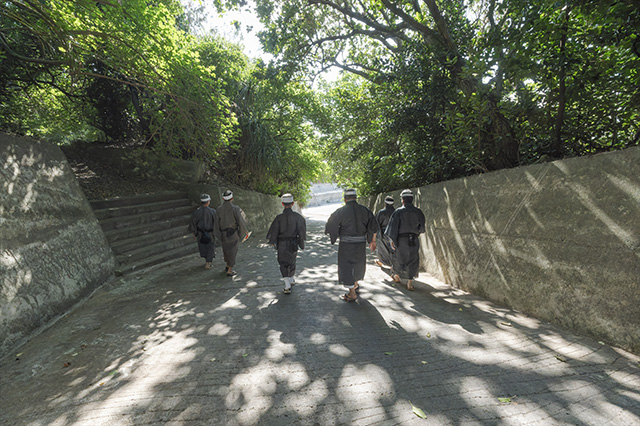
Kyoto, the ancient capital of Japan for more than a thousand years.
Approximately 40 kilometers north of its city center lies Miyama, a town renowned for its many preserved thatched-roof houses and for retaining the quintessential rural landscape of Japan. At the eastern edge of this region stretches the Forest of Ashiu.
Formally known as the Ashiu Forest Research Station, Field Science Education and Research Center, Kyoto University, the site has been used as a place for academic research and education since 1921. Under a 99-year surface rights agreement, it was originally established as the Ashiu Experimental Forest affiliated with the Faculty of Agriculture at Kyoto University.
With the passage of time, the forest was renamed a "Research Forest" in 2003.The original 99-year surface rights agreement reached its term in 2020. In the same year, the rights were renewed for a further 30 years, reaffirming the forest's status as a research forest and continuing its role to the present day.
Over the decades, the Forest of Ashiu has endured profound environmental challenges, including a large-scale development plan for a pumped-storage hydroelectric dam, severe damage caused by deer overbrowsing, and the spread of oak wilt disease. Though bearing the marks of these trials, the forest has overcome each of them and continues to preserve its remarkable beauty.
I first visited this forest in 1986.
The year before, I had traveled across Japan by bicycle in search of the country's original landscapes. However, even at that time, development was already advancing in many regions, and I was unable to find the kind of scenery I had been seeking.
The following year, I visited Miyama in central Kyoto Prefecture. There, alongside a rural landscape dotted with traditional thatched-roof houses, I encountered the Forest of Ashiu - a place that could truly be called a "real forest."
In the years that followed, I traveled to several countries overseas. These experiences, rather than diminishing its significance, only deepened my appreciation for the unique qualities of the Forest of Ashiu. From 1995 onward, I became increasingly devoted to documenting and expressing the forest through photography, a path that eventually led me to work there as a nature guide as well.
Revealing ever-changing expressions shaped by the seasons, the hours of the day, and shifting weather conditions, the Forest of Ashiu is home to a remarkable diversity of plant and animal life. It is not merely beautiful, but possesses a value and importance that can rightly be regarded as a treasure of Japan—and of the Earth itself.
As a forest that may be called a source of life, Ashiu stands at a critical moment. Across Japan, forests are increasingly confronted by social pressures and the impacts of climate change. Without conscious efforts toward protection and conservation, there remains the real possibility that these irreplaceable environments could one day be lost.
It is my hope that through photographs, film, and my work as a nature guide, many people will come to know and experience the presence of such a forest here in the Kyoto region - its beauty and significance, as well as the sense of healing and tranquility it offers.
If this, in turn, can serve as an opportunity to reflect not only on the protection and conservation of the Forest of Ashiu, but also on the forests found throughout Japan, I would feel deeply gratified.
February 2026 Shinya Hirose